When a tree needs to come down
Not every tree that worries you has to go. When we look at a tree, we tell you plainly whether it can be saved with pruning or whether removal is the safer call. Common reasons to remove a tree:
- It's dead or dying, with large dead limbs or little to no leaves in season.
- There's decay, a cavity or a crack in the trunk, especially where two main stems meet.
- It has a new or worsening lean, or the soil is heaving on one side.
- Roots were damaged by construction, a new driveway or grading.
- It's simply in the way of a build, an addition or a view.
How we take a tree down safely
- Look at the whole site. We check the lean, the wood, the roots and everything underneath: the roof, gutters, fences, gardens and power lines.
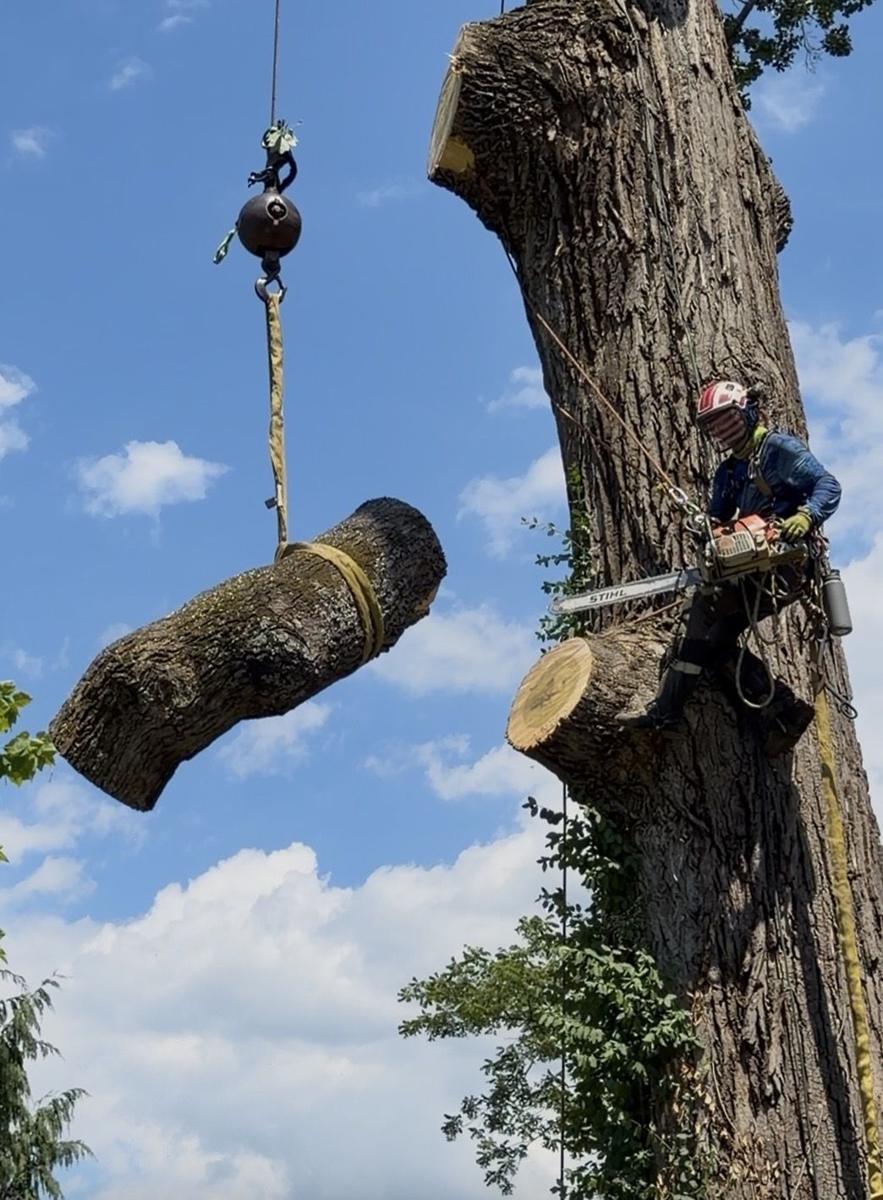
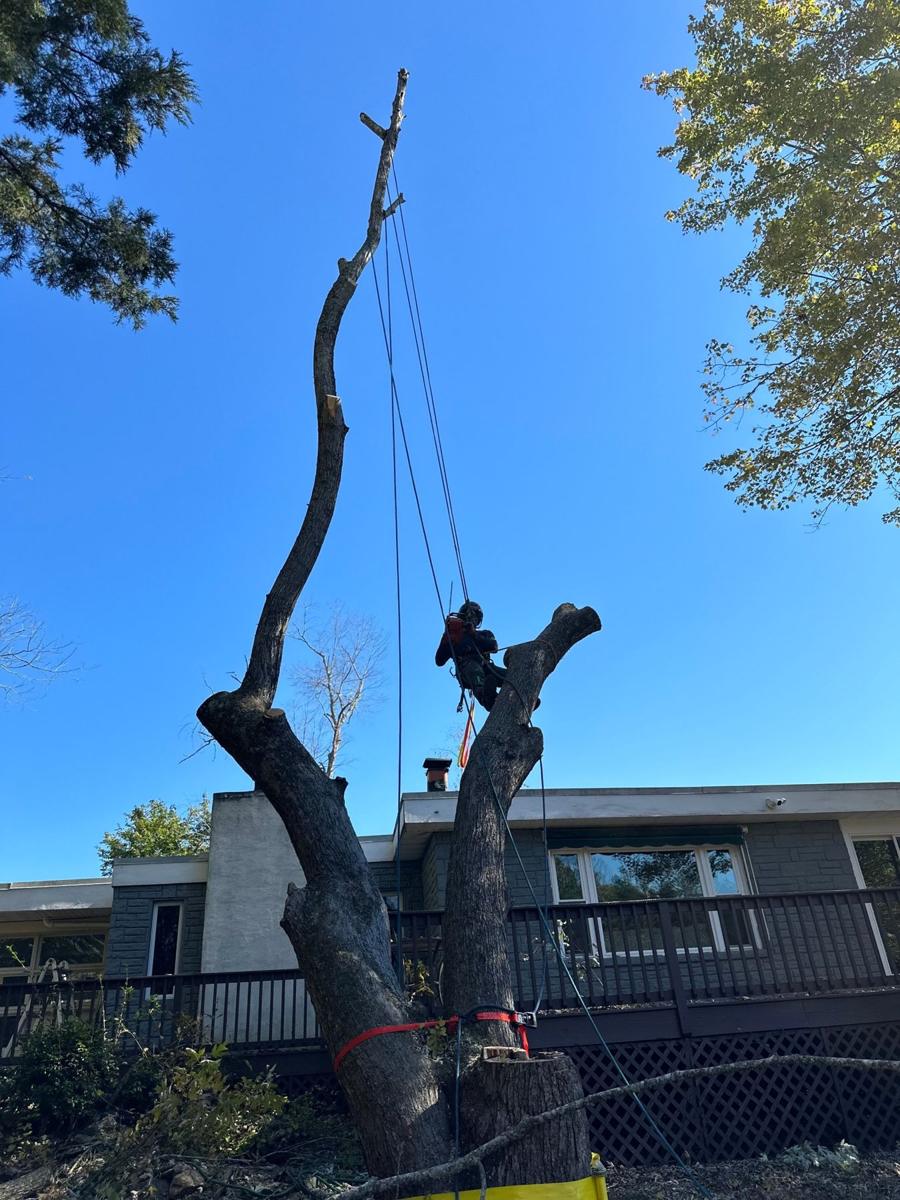
- Plan the rigging. In open space a tree can be felled. Near a house it comes down in sections, lowered on ropes or picked out by crane so nothing lands where it shouldn't.
- Cut and lower. A climber works from the tree while the ground crew controls each piece.
- Clean up. We chip the branches and deal with the wood so your yard is left in order.
Crane removals
For large trees right over a house, a crane is often the safest and fastest option. Each section is cut and lifted straight out, so heavy wood never swings toward the roof. We'll tell you at the estimate whether a crane makes sense for your tree.
What affects the price
Tree removal pricing depends on the tree's size and condition, how close it is to buildings or lines, how easy it is to reach, and whether you want the stump ground. Every estimate is free, and you get a clear price before any work starts.